







Hereford Cattle
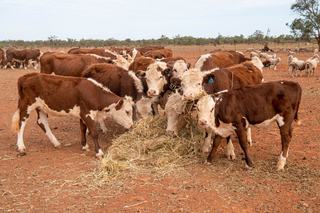
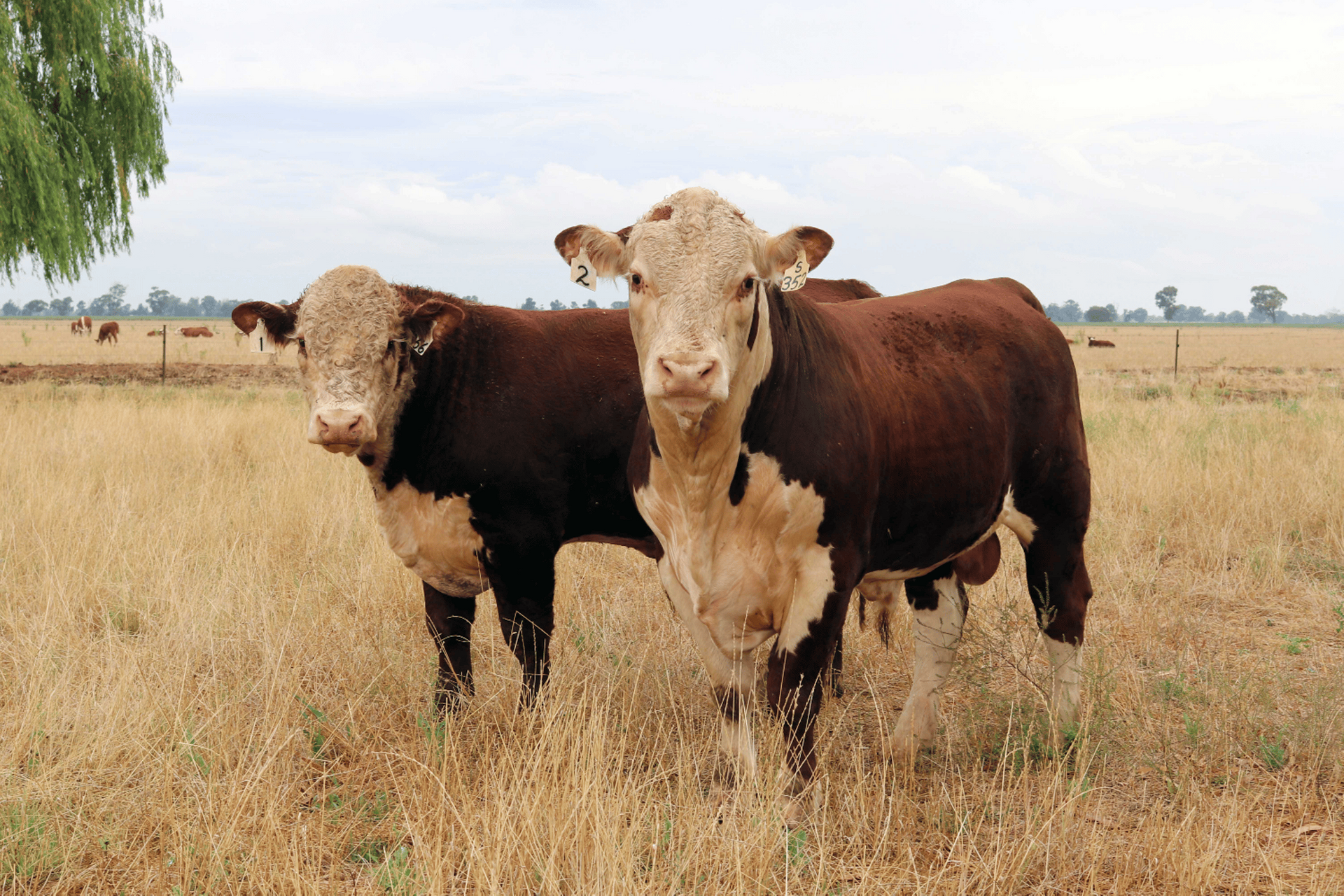
Herefords are one of the most enduring and widely distributed beef breeds in Australia. From the red-soil volcanic country of Victoria to the tablelands of New England, the sub-tropical Western Downs of Queensland and the high-country stations of southern New South Wales, Hereford stud cattle have been shaping commercial beef herds for over a century. Herefords present a compelling case, whether you are sourcing a new sire, building a seedstock foundation, or seeking a breed that calves easily, finishes efficiently, and suits a wide range of conditions. Farmbuy brings together some of the country's most respected Hereford breeding programmes in one place, providing access to proven genetics, transparent data, and studs with generations of selection behind them.
Hereford Cattle Studs







Latest Hereford Cattle News
The third annual Supple Whiteface on-property Hereford bull sale at Llangothlin drew strong repeat-buyer support, with 20 of the 26 sire...
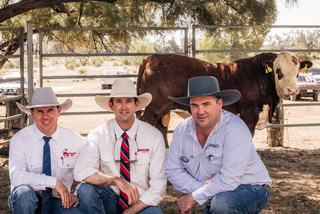
A program record high price for the Jarrah Reds and a $26,000 Hereford top headlined the Becker family's seventh annual Bred to Perform...
The seventh annual Bred to Perform bull sale at Glenarchy, Banana, on September 7 delivered a program-record price for the Jarrah Red breed...
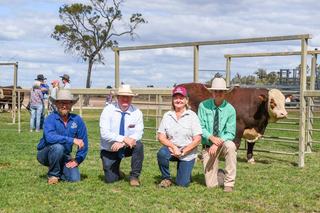
The first day of spring not only brought warmth to the air, but heat to the bull sale ring at the 2026 Devon Court Hereford bull sale, held...

The 2026 Devon Court Hereford bull sale, held on-property at Drillham on the first day of spring, September 1, drew strong and competitive...
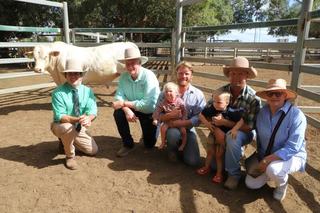
Industry-relevant was a phrase often used at the Lambert bull sale at Blackall on August 31, and the prizewinners at the morning's cattle...
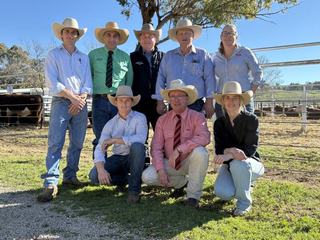
A handy drop of 50 millimeters of rain settled the dust and high demand across four states for carcase traits boosted bids at the 53rd...
The 53rd annual Ironbark Herefords bull sale at Barraba delivered a standout result on Friday, August 28, with 50 millimetres of welcome...
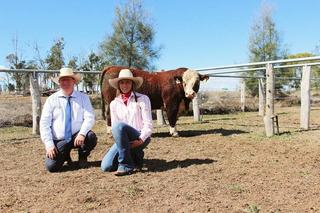
Previous sale record breakers got the top-price bull at the 10th annual Talbalba Herefords sale, where the average price was up by about...
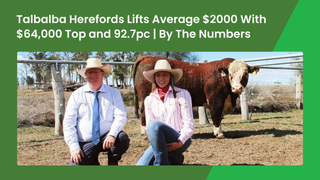
Previous sale record breakers secured the top-priced bull at the 10th annual Talbalba Herefords sale near Millmerran on August 27, 2026...
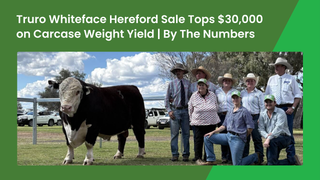
Carcase weight and yield were the driving themes at the Truro Whiteface Hereford bull sale at Bellata, where 17 millimetres of welcome rain...
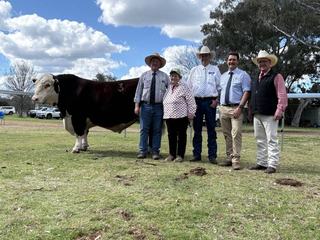
After 17 millimetres of rain to settle the dust, long-term clients and Queensland buyers dominated the Truro Whiteface Hereford bull sale...
Why Australian Beef Producers Choose Herefords
The Hereford breed's longevity in Australia is not accidental. Producers return to Herefords because the breed reliably delivers on the traits that drive commercial profitability, regardless of good or challenging seasons.
Calving Ease and Maternal Performance
Calving ease is consistently cited as one of the breed's greatest commercial strengths. Low-birthweight EBVs (Estimated Breeding Values), combined with strong maternal instinct and excellent milking ability, translates to productive cows even with minimal human intervention. For large commercial herds with limited labour, this reduces cost and improves weaning percentages. Many leading studs place sustained selection pressure on both direct and maternal calving ease, with some recording unassisted calving rates well above industry averages.
Temperament and Doing Ability
The Hereford's reputation for quiet temperament is well founded. This trait matters at every stage of production, from mustering and weaning to trucking and processing. Equally important is doing ability: Herefords are recognised for their capacity to convert pasture efficiently, maintain condition through dry spells, and recover quickly after marking or weaning. This grass-finishing ability makes them especially valuable in extensive systems and regenerative grazing programmes where supplement use is intentionally low.
Structural Soundness and Longevity
Feet, fertility, and constitution are three areas where disciplined Hereford breeders invest heavily. Structural soundness (correct feet and leg conformation, strong constitution, adequate scrotal circumference) is the foundation of longevity in cows and bulls. Studs that have selected for structure over multiple generations produce animals that stay productive for years longer, significantly improving seedstock investment returns.
Carcase Quality and Market Access
Hereford stud cattle produce carcasses that suit numerous premium markets. Intramuscular fat (IMF) levels, muscle depth, and carcase efficiency position Hereford and Hereford-cross cattle well in MSA (Meat Standards Australia) grading, EU accreditation pathways, and high-quality feedlot programmes. Additionally, their docile temperament means lower dark cutting rates at slaughter — a measurable advantage in MSA-compliant supply chains.
Poll Herefords and Horned Herefords — Understanding the Difference
Poll Herefords carry a natural polling mutation that eliminates horns without affecting production or conformation. First developed in Australia during the mid-20th century, the Poll strain has grown to dominate commercial usage, particularly in intensive and mixed-management systems where dehorning presents animal welfare, labour, and cost issues.
Horned Herefords still form a sizable share of the breed, found in many traditional stud programmes and some pastoral operations where horn structure has historical significance. In practical terms, however, the trend is firmly toward Poll Herefords — and most leading Australian studs now offer predominantly or exclusively polled genetics.
Hereford Genetics — Breedplan, Genomics and Estimated Breeding Values
Modern Hereford breeding Australia is driven by rigorous genetic data. Breedplan, the national genetic evaluation system managed by ABRI, gives buyers the ability to compare EBVs across studs with confidence, identifying sires that will move the needle on the traits that matter most to their system.
Key EBVs to consider when selecting Hereford bulls for sale include:
- Birthweight EBV — lower figures indicate reduced calving difficulty
- 200-day and 400-day growth weights — proxy for early-life vigour and carcase efficiency
- IMF EBV — selection tool for carcase quality and MSA compliance
- Calving ease (direct and maternal) — critical for heifer joining programmes
- Scrotal circumference — indicator of fertility and earlier-maturing progeny
Genomic testing has been adopted broadly across the industry, with many studs now genotyping bulls and females to increase accuracy on younger animals before they have performance records of their own. AI, IVF, and embryo transfer (ET) programmes enable studs to accelerate genetic gain, with high-merit females used to produce multiple progeny per season. Group Breedplan datasets (some encompassing tens of thousands of recorded animals) provide the population depth required to improve EBVs' predictability across different environments.
Semen and embryo sales widens the reach of stud genetics to producers who are unable to attend physical sales, with tested and certified material available from many of the studs listed on Farmbuy.
Where Herefords Thrive — Adaptability Across Australian Conditions
One of the breed's defining characteristics is its environmental range. Australian Herefords performs across a remarkable diversity of climates and terrain:
- New England tablelands and southern NSW highlands — high altitude, cold winters, strong seasonal variation; Herefords have been bred and selected for these conditions for over a century in properties sitting above 1,000 metres.
- Western Downs, Queensland — sub-tropical summer rainfall, large-scale station management, and the demand for cattle that perform efficiently across a broad country.
- Victoria's central and Gippsland regions — fertile, well-watered country where structural soundness and carcass quality attract premium feedlot and grassfed market returns.
- Low-rainfall and marginal country — studs that have deliberately selected for moderate frame, low birthweight, and efficient body condition retention have produced lines particularly suited to drought-prone environments.
Herefords are also increasingly prominent in regenerative agriculture systems, where low-input management, mob grazing, and minimal chemical use are priorities. Their foraging ability and temperament suit rotational grazing models, and their capacity to preserve conditions on native pasture reduces dependency on grain supplementation.
Hereford Studs
Among the programmes listed are multi-generational family operations with nearly a century of continuous selection behind them. They are studs whose records run deep into national Breedplan databases and whose bulls have been proven across diverse environments.
Devon Court Herefords in Queensland's Western Downs carries one of the longest stud histories in the country, with regenerative principles and a world-class IVF programme formulating their genetics. In New South Wales, Merawah Poll Herefords, operating from Boggabilla since 1936, has sold more than 5,000 bulls nationally and runs an active AI and ET programme under Breedplan measurement. Wirruna Poll Herefords in southern NSW brings over 70 years of principled selection and an 18,000-animal Group Breedplan dataset to underpin every mating decision. In Victoria, Ridgeview Herefords (Rosedale) applies a seventh-generation Bowman family focus on feet, fertility, and structure. Glendan Park Herefords (QLD) has been recording on Breedplan since 1990 and hosts an annual February bull sale. Ironbark Herefords, a 92-year-old Spencer family enterprise, combines grass-rearing with genomic testing and imported Holden bloodlines from the USA.
Bull sales are generally held in August and February, with leading studs presenting at the Sydney Royal, Brisbane Royal, RNA, and Dubbo National Poll Hereford Show and Sale. Listings on Farmbuy include bulls, females, semen, and embryos — enabling buyers at every scale to access quality genetics.
Buying Hereford Bulls — What to Look for in a Quality Sire
Selecting the right Hereford bull is the most leveraged genetic decision a producer makes. A single sire can influence 25–50 calves per season across five or more years, highlighting how critical this step is.
Start with EBVs benchmarked against the breed average for your target traits. If calving ease is the primary driver, prioritise bulls in the top quartile for both direct and maternal calving ease; if you are targeting MSA or EU markets, weigh your selection toward IMF and growth EBVs accordingly.
Physical inspection remains essential:
- Feet and legs: look for strong pasterns, well-angled hooves, and correct hind-leg set
- Sheath and underline: very important in tropical and sub-tropical environments
- Scrotal circumference: minimum 32–34cm at 12–14 months indicates good fertility
- Temperament: assess in the yard and at the fence — a difficult bull is a safety risk and a handling cost
Inquire about semen testing (motility and morphology results), vaccination protocols, and the stud's own calving records. Understanding whether the stud's conditions broadly match your own (altitude, rainfall, supplementation level) helps predict the bull's performance.
Frequently Asked Questions About Herefords in Australia
What are Poll Herefords and how do they differ from horned Herefords?
Poll Herefords are naturally hornless cattle that carry a dominant polling gene, developed from the broader Hereford breed in Australia from the mid-twentieth century onward. They are genetically identical to horned Herefords in terms of production traits but eliminate the need for dehorning, reducing labour, costs, and animal welfare concerns. Poll Herefords now dominate commercial seedstock supply in Australia, although horned Herefords remain available through some traditional stud programmes.
Are Herefords a good choice for first-calf heifers?
Yes. Calving ease is one of the breed's primary selection emphases in Australia. Leading Hereford studs utilise Breedplan EBVs to identify sires with low birthweight and high calving ease scores, meaning heifers are far less likely to require assistance at calving. For producers joining heifers as a significant portion of their breeding mob, selecting a Hereford bull with strong calving ease EBVs is one of the most effective methods to reduce intervention and improve first-calf survival rates.
What EBVs should I prioritise when selecting a Hereford bull?
It depends on your production system and target market. For calving ease, prioritise low birthweight EBV and high calving ease direct (CE Dir) and calving ease daughters (CE Dtrs). For growth, look at 200-day and 400-day weight EBVs. For carcass quality and MSA compliance, IMF EBV is the primary selection tool. Scrotal circumference EBV is a useful proxy for early fertility in progeny. Most reputable Hereford stud cattle operations publish full Breedplan reports with percentile rankings. Compare bulls within the breed average table, not in isolation.
How do Herefords perform in the feedlot and on grass-finished programmes?
Herefords and Hereford-cross cattle perform strongly in both systems. Their natural IMF deposition and efficient feed conversion make them competitive in feedlot programmes targeting high MSA grades or EU-compliant specifications. On grass-finished systems, their doing ability and capacity to convert native and improved pasture efficiently enable them to achieve target weights without supplementary grain. Many Australian studs select simultaneously for grass-finishing ability and feedlot performance, producing dual-purpose progeny well suited to multiple markets.
What is the typical sale season for Hereford bulls in Australia?
Most Hereford bull sales in Australia are held in August and February, but timing varies by state and individual stud. Queensland operations often hold February sales to align with autumn joining; southern NSW and Victorian studs frequently favour August sales ahead of spring. Leading studs also present at national show sales — including the Sydney Royal, Brisbane Royal, RNA, and the Dubbo National Poll Hereford Show and Sale — throughout the year.
Are Herefords suitable for low-rainfall and drought-prone regions?
Yes, particularly lines that have been bred and selected under those specific conditions. Several Hereford seedstock programmes in Australia have spent multiple generations selecting for moderate frame, low maintenance requirements, and high body condition retention in dry years. These lines tend to have lower birthweights, tighter frames, and strong constitutions. They outperform larger, faster-growing breeds in poor seasons. Producers in low-rainfall zones should look for studs that operate in comparable environments and have selection records to match.
What is Breedplan and why does it matter for buying Hereford seedstock?
Breedplan is Australia's national beef cattle genetic evaluation system, managed by the Animal Genetics and Breeding Unit (ABRI). It calculates EBVs for individual animals based on their recorded performance data and that of their relatives, adjusted for environmental and management effects. EBVs allow buyers to compare animals across different studs and properties on a level playing field, making it possible to identify superior sires and not rely on visual appraisal. When buying Hereford stud cattle, always request the animal's full Breedplan report and compare it against breed-average benchmarks.
Can I buy Hereford semen or embryos through Farmbuy stud listings?
Many of the Hereford breeding operations listed on Farmbuy offer semen and embryos in addition to live animals. Semen from proven sires is available from several studs and is subject to fertility testing and certification before sale. Embryos from high-merit females are available as well from studs running IVF and ET programmes. Contact individual stud listings directly through Farmbuy to inquire about available genetics and delivery options.
