










Angus Cattle
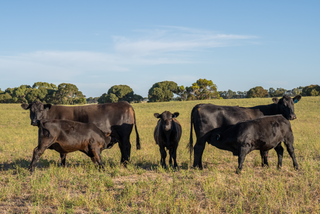
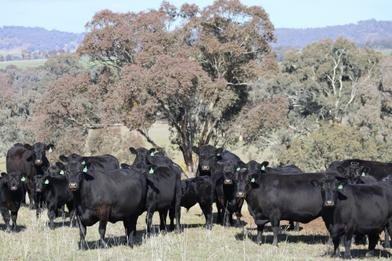
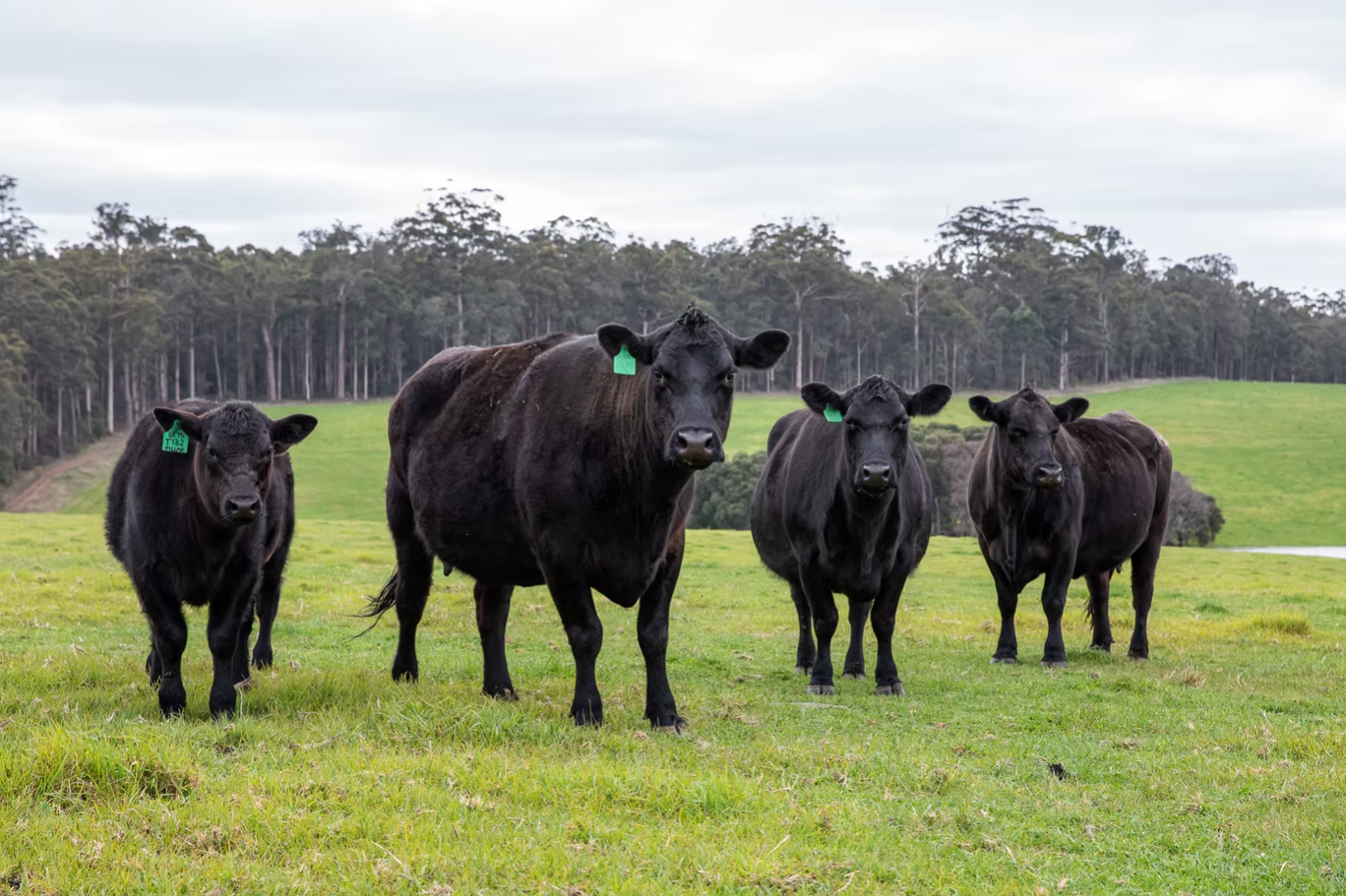
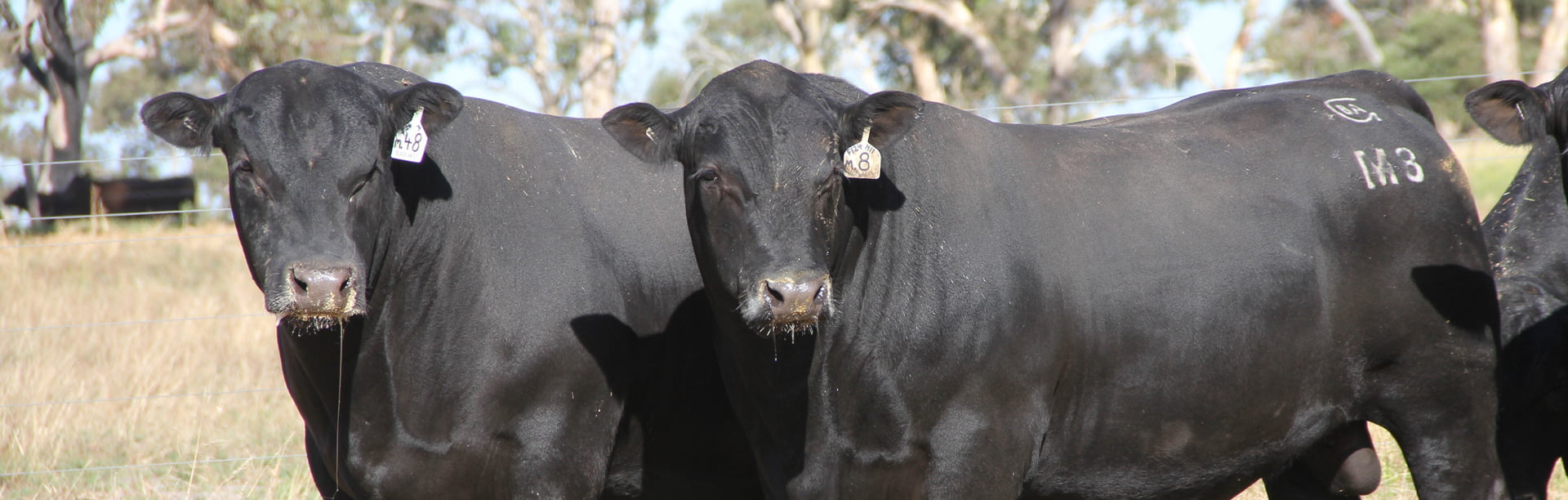
When Australian commercial beef producers talk about the breed that has shaped the modern cattle industry, Angus comes up time and again. Black and Red Angus cattle have proven themselves across virtually every production environment this country offers, ranging from the high country of the Monaro to the coastal flats of Gippsland and the wheat-belt paddocks of Western Australia. On Farmbuy, you will find some of the nation's most reputable Angus stud operations.
For commercial producers, stud breeders, or first-generation beef farmers alike, this page is your starting point.
Angus Cattle Studs






Latest Angus Cattle News
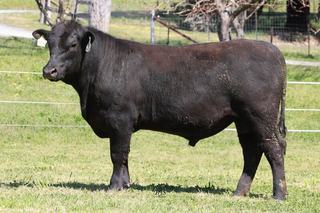
Maternal traits and feed efficiency were on the list with buyers paying to a top of $10,000 for bulls in the Reiland Angus online sale.
Maternal traits and feed efficiency were high on the list for commercial buyers at the Reiland Angus Specially Selected Bull Sale, with...
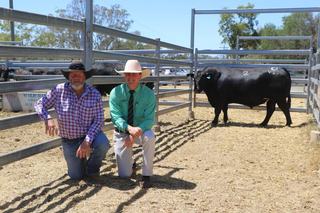
While the Guest family worried their first foray into the Queensland stud stock auction scene was too late in the season, it was perfect...
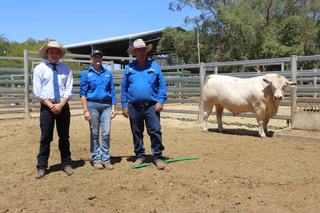
Having good bulls for sale in the region was one of the big attractions for buyers at the inaugural Best of the West Charolais bull sale at...
Having good bulls for sale within the region was a major draw for buyers at the inaugural Best of the West Charolais bull sale at Blackall...
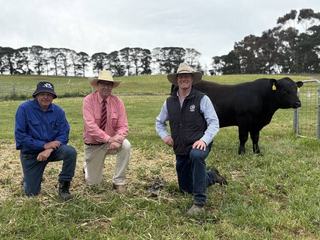
A prominent Angus seedstock business and a commercial farming operation have purchased the two equal-top-priced bulls at the Bowmont Angus...
The Bowmont Angus bull sale at Tatyoon sold 45 of the 61 Angus bulls offered on Thursday, recording a top price of $18,000 twice for an...
Explosive growth and commercial doability were sought after at a milestone on-property sale for Bongongo Angus, Coolac, held on Wednesday...
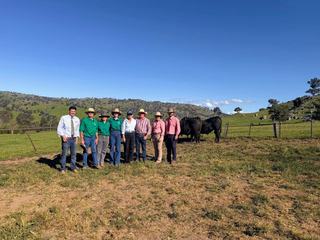
Explosive growth and commercial doability were highly sought after at a milestone sale for Bongongo Angus, Coolac.
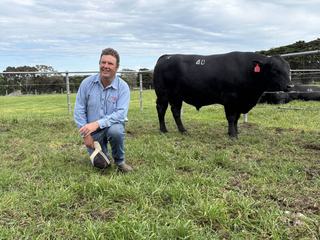
The top two bulls from Murdeduke Angus' spring sale were purchased by a brand-new operation which spent more than $30,000 to establish its...
The Murdeduke Angus spring bull sale, held online only, offered and sold all 51 bulls catalogued to a top of $17,000 for an average of...
Paringa Livestock's annual yearling bull sale achieved a complete clearance of its 42-head draft, with commercial and stud buyers from...
Why Angus Dominates Australian Beef Production
No breed in Australia commands a larger footprint across commercial beef supply chains than Angus. The reasons aren't difficult to understand. Angus cattle are adaptable — they perform on lush coastal kikuyu, native-grass high country, irrigated river flats, and dry-country rangeland alike. They are productive mothers, efficient converters, and they consistently hit the carcase targets that current processors and retailers demand.
Critically, Angus cattle align closely with Meat Standards Australia (MSA) grading criteria. Angus-cross cattle consistently achieve higher MSA index scores, which translates directly into premium grid access and better returns at the hook for producers selling into quality-assured markets. Both the Black Angus stud sector and the growing Red Angus segment contribute to this commercial momentum, providing buyers a choice of coat colour without sacrificing performance.
For commercial beef operations across Australia, integrating Angus genetics — whether through purebred bulls or strategic crossbreeding — stands as one of the most reliable paths to improved productivity and market compliance.
What Sets a Quality Angus Stud Apart
A seedstock operation involves much more than just bull-selling. The best Angus studs view their role as providing a complete genetic programme to their commercial clients. The objective is to deliver measurable and lasting improvement across the herd. As the team at Injemira Angus put it: "Seedstock production is not selling a bull but selling a complete programme."
That philosophy shapes everything from how elite studs select their cow families to the traits they emphasise in their annual bull sales. The foundation breeds of many leading programmes (including respected cow families like Dream, Champagne, Jestress, Lowan, Barunah, and Wilcoola) have been developed and refined across multiple generations of meticulous selection.
Several of Australia's longest-running Angus studs illustrate this commitment. Hazeldean, established in 1927 in New South Wales, was the birthplace of BREEDPLAN in 1980. Today, they offer more than 400 bulls per year across NSW, SA, and QLD. Mordallup Angus in Western Australia traces seven generations of the Muir family's involvement with the breed — their ancestors were among the first to bring Angus cattle to WA in the 1890s. Bannaby Angus runs 1,200-plus commercial cows on 100% pasture, and Lawson Angus supplies more than 1,000 performance-tested bulls per year across four states. Operations like these represent the scale and rigour that serious seedstock production demands.
Many leading studs also run active AI (Artificial Insemination) and ET (Embryo Transfer) programmes to accelerate genetic gain. This will allow them to use the world's best sires whilst maintaining herd health integrity.
Understanding Angus EBVs and BREEDPLAN
Buying an Angus bull on looks alone belongs to another era. Today, the most commercially successful producers and studs make selection decisions driven by EBVs: Estimated Breeding Values.
An EBV is a statistically derived estimate of an animal's genetic merit for a given trait, expressed as a difference from the breed average. For instance, a positive EBV for 400-day weight indicates progeny that will grow faster than the breed average. Conversely, a negative calving ease direct EBV indicates heifers using that bull are more likely to need assistance at calving. EBVs are not predictions of individual animal performance, but are estimates of genetic transmissibility across a bull's progeny.
BREEDPLAN is the national genetic evaluation system that generates EBVs for Angus cattle in Australia. It was launched at Hazeldean in 1980 and remains the industry's gold standard for objective selection. Koojan Hills in Western Australia was among the earliest commercial adopters of BREEDPLAN in 1986, a commitment to data-driven selection that has defined them ever since.
When assessing Angus bulls, the EBVs that matter most to commercial producers include:
- Birth Weight EBV — lower values reduce dystocia risk
- Calving Ease Direct (CED) — higher values mean more unassisted calvings
- 200-, 400- and 600-Day Growth EBVs — benchmarks for growth rate across production stages
- Eye Muscle Area (EMA) EBV — reflects genetic potential for red meat yield
- Intramuscular Fat (IMF) EBV — a predictor of marbling and MSA compliance
- Scrotal Circumference EBV — correlated with daughter fertility and age at puberty
Feed efficiency EBVs measure residual feed intake and are an emerging and increasingly important selection criterion. Bannaby Angus has been a leader in prioritising feed efficiency alongside traditional carcase and fertility traits.
Key Traits to Look For When Buying Angus Bulls
Calving Ease and Birth Weight
For producers joining heifers at two years, a hallmark of high-fertility Angus programmes, calving ease is non-negotiable. A moderate birth weight EBV and a strong calving ease direct figure protect first-calf heifers, reduce labour at calving, and save calves that would otherwise be lost. The best Angus studs balance this against growth so that easy-calving bulls don't cost producers at the other end of the production chain.
Structural Soundness and Temperament
A bull that breaks down at four years old is a liability. Elite studs select hard on structural correctness: feet and leg angles, scrotal circumference, sheath conformation, and overall body capacity. They determine how long a bull will remain fertile and serviceable in the paddock.
Equally crucial is temperament. Quiet, docile cattle are safer to handle, cause less bruising and stress during mustering and transport, and usually perform better on both grass and in the feedlot. Across the Angus studs listed on Farmbuy, docility is consistently cited as a core selection priority.
Growth Performance
Matching a bull's growth genetics to your feed base and market target is essential. A high-growth Angus bull placed over cows on a low-input native-grass system could lead to underperforming progeny simply due to inadequate feed. Meanwhile, producers with access to improved pastures or feedlot finishing can afford to push growth harder. Use 400-day and 600-day weight EBVs as your primary benchmarks, and cross-reference with the stud's management conditions.
Carcase Traits — EMA, IMF, and Yield
Eye Muscle Area (EMA) measures the cross-sectional area of the longissimus dorsi muscle at the 12th–13th rib, and is the most widely used indicator of red meat yield in Australian carcase assessment. A greater EMA EBV means more saleable beef per carcase.
Intramuscular Fat (IMF), or marbling, is what puts Angus on premium grids. MSA grading rewards higher marble scores, and Angus genetics are amongst the best in the world for natural marbling potential. For producers aiming domestic premium retail or export markets, IMF selection is key.
Black Angus vs Red Angus — Understanding the Difference
The distinction between Black Angus and Red Angus is purely genetic: Red Angus cattle carry two copies of the recessive red gene. They give them their characteristic coat colour, whilst sharing essentially the same performance profile as their black counterparts. Both exhibit strong maternal traits, excellent carcase quality, and reliable fertility.
Red Angus has been gaining ground in Australia's commercial sector. Hicks Beef operates the largest Red Angus herd in Australia, with more than 200 breeding females, and ranks in the top 1% of the Breedplan Supermarket Index — a performance credential that highlights the commercial viability of the Red variant. Producers in warmer climates occasionally favour Red Angus for anecdotal reports of slightly greater heat tolerance, though both colours remain highly competitive across most Australian environments.
How Angus Genetics Lift Crossbreeding Programmes
Angus bulls work exceptionally well in crossbreeding systems, both as maternal sires and as terminal sires over Bos indicus-influenced cows. The heterosis (hybrid vigour) generated when crossing Angus over Brahman-cross females can deliver notable improvements in growth rate, fertility, and carcase compliance compared to either purebred parent.
MSA research consistently shows that Angus-cross cattle score higher on the MSA eating quality index than many other cross-types, giving producers a tangible advantage. The breed's moderate milking ability is also well-suited to mixed grazing systems — productive enough to raise good calves, but not so demanding that cows fail to re-join in a timely fashion on average conditions.
Where Are Australia's Angus Studs Located?
Angus stud cattle are bred right across the country, reflecting the breed's remarkable adaptability. On farmbuy.com you will find listed operations in:
- NSW — Snowy Mountains, Monaro, Southern Tablelands, Murray Valley, and Taralga
- VIC — Gippsland, Rosedale, and Neerim South
- WA — Albany, Kojonup, and Manypeaks
- QLD — Meandarra and surrounding districts
- TAS / King Island — Bass Strait island operations with distinctive grass-fed programmes
Each region shapes its Angus programme differently. High-country studs tend to emphasise fertility and structural soundness under tough conditions; coastal and irrigated operations may prioritise growth and carcase; island and Tasmanian studs often lead with grass-fed, hormone-free production credentials. This diversity means buyers can find genetics tailored to their specific environment and market.
Annual on-property bull sales are the primary sales channel, with some operations offering more than 400 bulls per year and others running more curated catalogues of 70 to 100 carefully picked bulls. Lawson Angus, supplying buyers across four states with more than 1,000 performance-tested bulls annually, exemplifies the national scale that the best seedstock operations can achieve.
Browse and Connect with Angus Studs on Farmbuy
Farmbuy brings together Australia's leading Angus stud operations in a single, easy-to-navigate directory. All within a single platform, browse listings by state, view stud profiles, check upcoming sale dates, and get in touch with breeders directly.
The best Angus bulls are in demand, and quality catalogue places fill fast. If you're planning to buy ahead of your next joining season, connect with studs early and register for sale notifications so you don't miss the bulls that suit your programme.
Frequently Asked Questions About Angus in Australia
What is an Angus stud?
An Angus stud is a breeding operation that produces and sells purebred Angus genetics — normally bulls, sometimes females — to commercial beef producers and other studs. The role of a seedstock operation is to drive genetic improvement across the broader cattle industry. Elite Angus studs select and test animals over multiple generations, using BREEDPLAN EBVs to identify animals with superior performance across traits like growth, fertility, calving ease, and carcase quality.
What is the difference between Black Angus and Red Angus?
Black Angus and Red Angus are the same breed with one genetic difference: Red Angus cattle carry two copies of the recessive red coat gene. Performance characteristics are largely equivalent. Red Angus is sometimes noted for marginal heat tolerance advantages in warmer climates. In Australia, Hicks Beef runs the country's largest Red Angus herd with more than 200 breeding females and ranks in the top 1% of the Breedplan Supermarket Index.
What are EBVs and why do they matter when buying Angus bulls?
EBVs (Estimated Breeding Values) are statistically derived estimates of an animal's genetic merit for a specific trait, expressed as a difference from the breed average. They allow buyers to compare bulls objectively, regardless of where or how they were raised. Key EBVs for Angus bulls include birth weight, calving ease direct, 400-day growth, EMA (Eye Muscle Area), and IMF (marbling). EBV-driven selection is far more reliable than visual assessment alone and helps producers make consistent genetic progress across their herd.
What is BREEDPLAN?
BREEDPLAN is Australia's national genetic evaluation system for beef cattle. It analyses performance data — birth weights, growth records, carcase measurements, fertility data — submitted by registered studs, then generates EBVs for each animal. BREEDPLAN was launched at Hazeldean Angus in New South Wales in 1980 and has since become the foundation of objective bull selection across the Australian industry. Most reputable Angus studs submit data to BREEDPLAN and publish EBVs in their sale catalogues.
What does "calving ease" mean in Angus cattle?
Calving ease refers to a cow's or heifer's ability to deliver a calf without human assistance. It is measured via the Calving Ease Direct (CED) EBV, which estimates the percentage of unassisted calvings expected when a bull is joined to heifers. Higher CED values indicate easier calving. In Angus breeding programmes, calving ease is closely linked to moderate birth weight selection, which reduces the risk of dystocia (difficult birth). This is particularly important for first-calf heifers joining at two years of age.
What carcase traits matter most in Angus cattle?
The three primary carcase traits in Angus selection are Eye Muscle Area (EMA), Intramuscular Fat (IMF or marbling), and retail beef yield. EMA measures the size of the main loin muscle and is the key indicator of saleable red meat volume. IMF determines eating quality and MSA marble score, which drives access to premium markets. Retail yield quantifies the percentage of the carcase that becomes sellable cuts. Together, these traits determine the economic value of the animal at the hook.
What is EMA (Eye Muscle Area) in Angus cattle?
Eye Muscle Area (EMA) is the cross-sectional area of the longissimus dorsi (loin) muscle, measured at the 12th–13th rib interface, usually via ultrasound scanning on live animals or by direct measurement at slaughter. It is the most commonly used indicator of red meat yield in Australian carcase assessment. The EMA EBV estimates the genetic component of an animal's EMA, allowing producers to select bulls that will transmit higher yield potential to their progeny.
What is IMF / marbling in Angus, and why does it matter?
IMF (Intramuscular Fat), commonly called marbling, is the fine threads of fat deposited within the muscle itself. Higher marbling improves meat tenderness, juiciness, and flavour. These are the eating quality attributes that MSA (Meat Standards Australia) grading rewards with higher scores and premium processor grids. Angus cattle are internationally recognised for superior natural marbling potential. For producers selling into premium markets, selecting bulls with a positive IMF EBV is a path to better carcase returns.
How do I choose the right Angus bull for my operation?
Start by defining your production system and market target: What is your feed base? Are you finishing on grass or feedlot? What grid are you selling onto? Then prioritise EBVs accordingly (e.g. calving ease and birth weight if joining heifers; 400-day growth if backgrounding weaners; EMA and IMF if targeting premium grids). When inspecting physical structure, examine the feet, legs, and scrotal circumference. Attend on-property bull sales where possible, and speak directly with the stud about the programme behind the bull. The genetic context matters as much as the individual animal.
What is a seedstock operation in beef cattle?
A seedstock operation, also called a stud, breeds and sells registered, pedigree-recorded cattle to other producers for use as herd sires or foundation females. Their genetic decisions flow downstream into thousands of commercial progeny. The best seedstock operations combine rigorous BREEDPLAN data collection, multi-trait selection across multiple generations, and transparent reporting of EBVs. As breeders at Injemira Angus put it: "Seedstock production is not selling a bull but selling a complete programme."
What does "structurally sound" mean when describing cattle?
Structural soundness refers to the correctness of an animal's skeleton, joints, feet, and legs. A structurally sound bull has well-angled hocks, correct feet shape (no overgrown or twisted claws), strong pasterns, adequate scrotal circumference, and good overall body balance. Structural faults reduce longevity in the paddock. A bull that breaks down at three years old costs producers dearly in lost joining capacity and replacement costs. Elite Angus studs inspect and cull hard for structural faults, ensuring only sound animals enter the sale catalogue.
Why choose Angus for a crossbreeding programme?
Angus bulls used in crossbreeding deliver several proven advantages: strong heterosis (hybrid vigour) when crossed over Bos indicus-influenced cows, consistent MSA compliance in progeny, excellent carcase quality, and reliable temperament. Angus-cross cattle regularly achieve higher MSA eating quality index scores than many other cross combinations, giving producers an edge. The breed's moderate milking ability also makes Angus-cross females productive but not overly demanding on pasture, which is valuable in mixed grazing systems.
What states are Angus studs located in across Australia?
Angus studs operate across most Australian states and territories. On Farmbuy, you will find operations in NSW (including the Monaro, Snowy Mountains, Southern Tablelands, Murray Valley, and Taralga regions), Victoria (Gippsland, Rosedale, Neerim South), Western Australia (Albany, Kojonup, Manypeaks), Queensland (Meandarra), and Tasmania and King Island. The geographic spread reflects Angus cattle's adaptability across high country, coastal, and drier inland environments.
How are Angus bulls sold in Australia?
Most Angus bulls in Australia are sold at annual on-property bull sales held at the stud's property, typically from late winter through spring. Some larger operations such as Hazeldean (400+ bulls/year) and Lawson Angus (1,000+ performance-tested bulls across four states) hold major catalogued events with extensive EBV data and carcase information available in advance. Bulls can also be purchased via private treaty throughout the year. Farmbuy lists upcoming Angus sale dates and allows buyers to register for notifications so they don't miss sales from shortlisted studs.
What is feed efficiency in beef cattle, and why does it matter?
Feed efficiency measures how effectively an animal converts feed into body weight gain. The most common metric is Residual Feed Intake (RFI): animals with a lower (more negative) RFI eat less feed than expected for their size and growth rate, improving efficiency. In an era of rising input costs, selecting for feed efficiency can significantly reduce the cost of production per kilogram of beef. BREEDPLAN now generates RFI EBVs for Angus cattle, and studs like Bannaby Angus have made feed efficiency a core pillar of their selection programme alongside carcase and fertility traits.
