








Droughtmaster Stud Genetics: How Australia's Leading Breeders Are Shaping Herd Resilience
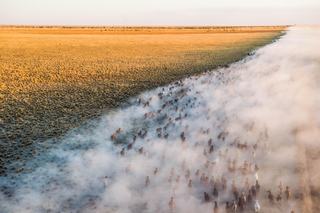
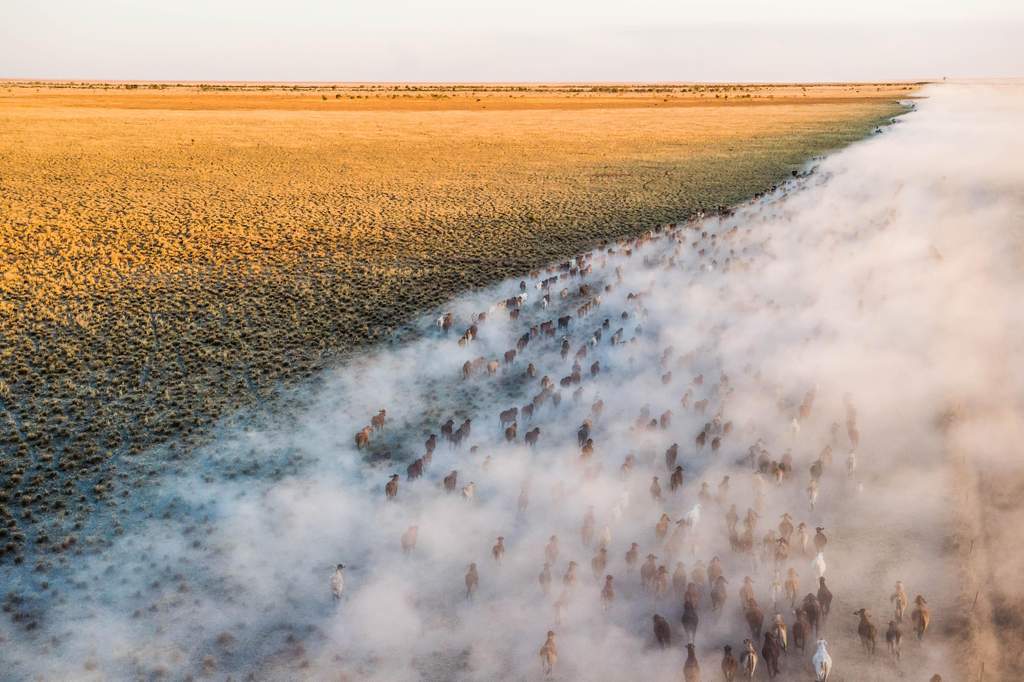
Northern Australia's cattle producers face a familiar predicament. Markets demand higher carcass quality and consistent supply. However, the climate delivers heat, ticks, and droughts that punish cattle not bred for these conditions. It's a challenge that has driven thousands of commercial operators toward one breed above all others: the Droughtmaster.
Developed specifically for Australia's tropical and semi-arid pastoral zones, Droughtmaster genetics offer a rare blend of hardiness without sacrificing commercial performance. For producers weighing their next bull purchase, understanding what differentiates an elite Droughtmaster stud from the average is critical.
This guide breaks down the breed's core advantages, profiles the stud programs setting the standard, and outlines what to look for when selecting bulls. Farmbuy's Droughtmaster stud listings provide a starting point for producers ready to compare genetics and connect with breeders.
Why Droughtmaster cattle dominate northern Australian herds
Origins of the breed and its tropical advantage
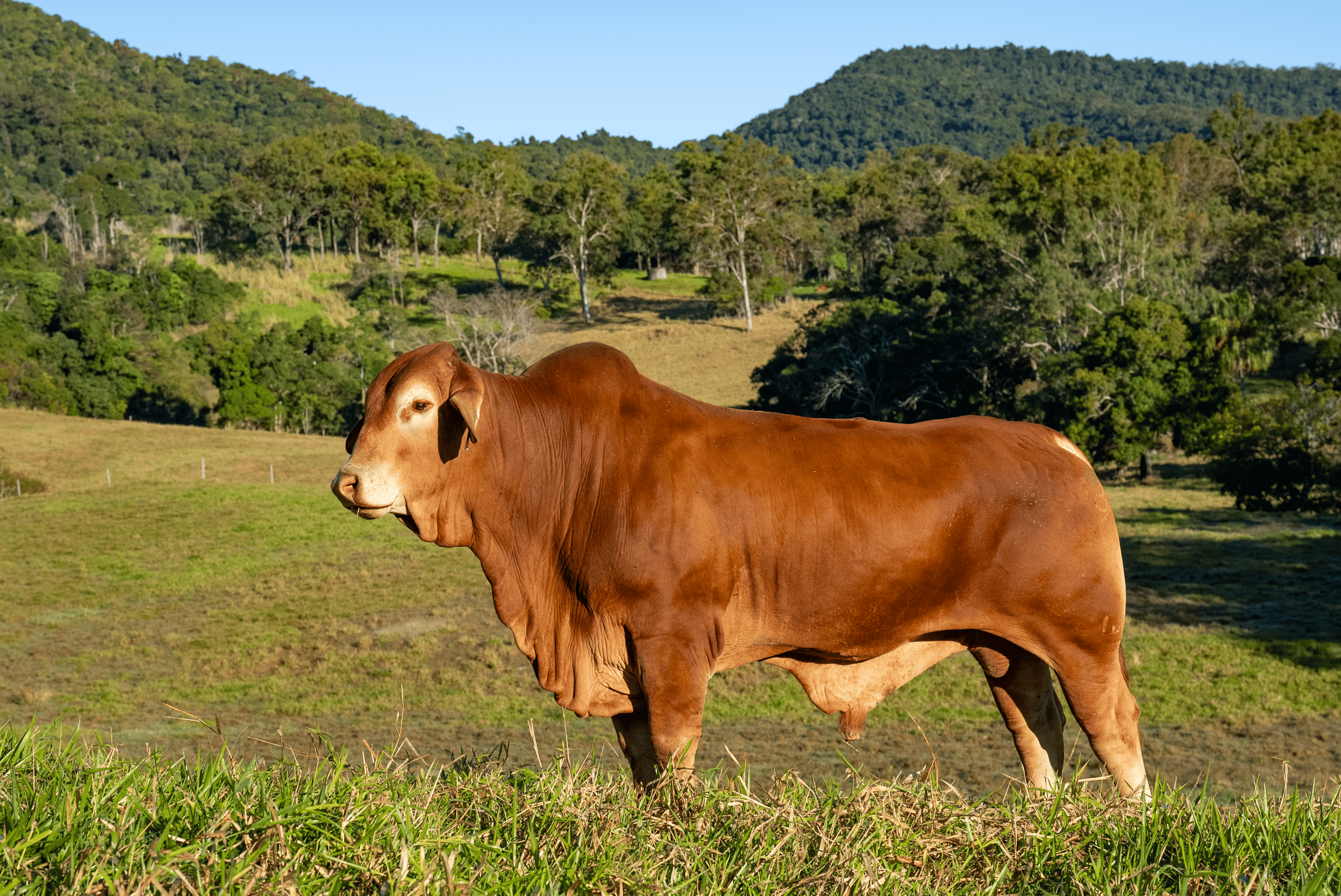
The Droughtmaster was purpose-bred in Queensland during the mid-20th century, crossing Bos indicus (Brahman) with British breeds to produce cattle suited to hot, tick-prone country. The result is a stabilised composite that carries enough tropical blood for environmental resilience, balanced with the carcass traits and temperament preferred by processors and feedlots.
Unlike purebred Brahman cattle, which can be tough to handle and slower to finish, Droughtmasters are bred for calm temperament and feed efficiency. They perform reliably in environments where European breeds are simply unable to thrive.
Heat tolerance, tick resistance, and digestive efficiency
The physiological advantages of Droughtmaster cattle are well documented. Short-haired coats, increased sweat gland density, and loose skin all contribute to effective thermoregulation. They allow cattle to continue grazing and gaining weight even through peak summer temperatures.
Natural resistance to cattle ticks and internal parasites reduces reliance on chemical treatments. In regions where tick fever and buffalo fly pressure are incessant, this translates directly to lower input costs and fewer cattle losses.
What could be the most key fact is that the breed's digestive efficiency allows cattle to preserve body condition on nutrient-poor, frosted, or drought-affected pastures. When feed quality drops, Droughtmasters continue to endure where other breeds flounder.
How Droughtmaster genetics compare to other tropical breeds
Santa Gertrudis and Brahman cattle share some of the same country, although the Droughtmaster occupies a distinct commercial position. Brahmans offer superior heat tolerance but tend to lack optimal temperament and the carcass consistency demanded by modern markets. Santa Gertrudis cattle perform well in improved pasture systems but may struggle in the harshest inland environments.
Droughtmasters offer a middle ground: tropical enough for the conditions, commercial enough for the processor. Producers can compare these genetics side by side through Farmbuy's stud and breed listings, filtering by region and breeding focus.
Inside Australia's top Droughtmaster stud programs
Glenlands — setting breed records and show ring standards
Any discussion of elite Droughtmaster genetics starts with Glenlands, established near Rockhampton in 1968. The stud has dominated the breed's competitive landscape for decades, but recent years have been even more remarkable.
In 2023, Glenlands set a breed record of $320,000 for a single bull; a figure that exemplifies the genetic value buyers place on their program. At Beef2024, the stud claimed 14 of 17 major categories, a level of consistency that few operations in any breed can match.
Their breeding philosophy revolves around fertility, quiet temperament, high carcass yield, and homozygous polled genetics. That last trait, breeding cattle that are genetically hornless, is increasingly coveted as processors and feedlots favour polled cattle for animal welfare and handling efficiency.
The role of foundational studs in genetic improvement
Glenlands doesn't operate in isolation. Major sires in the breed, such as Glenlands D Watchman, carry genetics drawn from complementary programs like Rondel and Strathfield. These studs share a common goal: producing cattle with the structural soundness and durability to perform across Queensland's gruelling inland country.
This layering of genetics from several elite sources is what spurs breed-wide improvement. It also means that buyers ought to look beyond one stud name and study the sire lines behind the bulls on offer.
What separates an elite Droughtmaster breeding program
Top studs operate under stringent culling regimes. Only the most fertile females, many joined as early as 14 months of age, are retained in the breeding herd. Cows that fail to conceive or produce structurally defective calves are removed quickly.
This approach means that every bull offered for sale possesses genetics that have been pressure-tested across multiple generations, presenting proven performance for prospective buyers.
Key traits to prioritise when selecting a Droughtmaster bull
Fertility and structural correctness
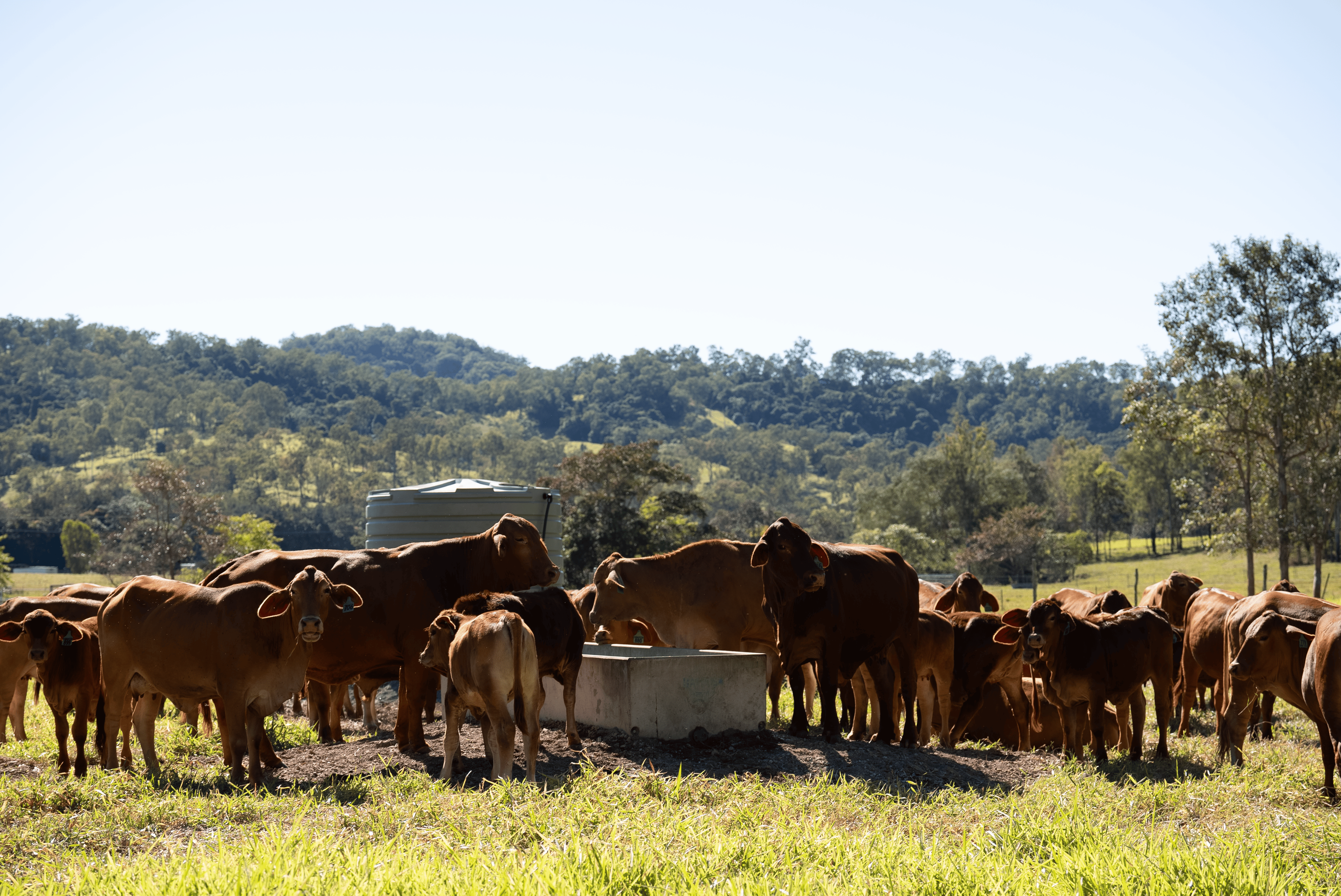
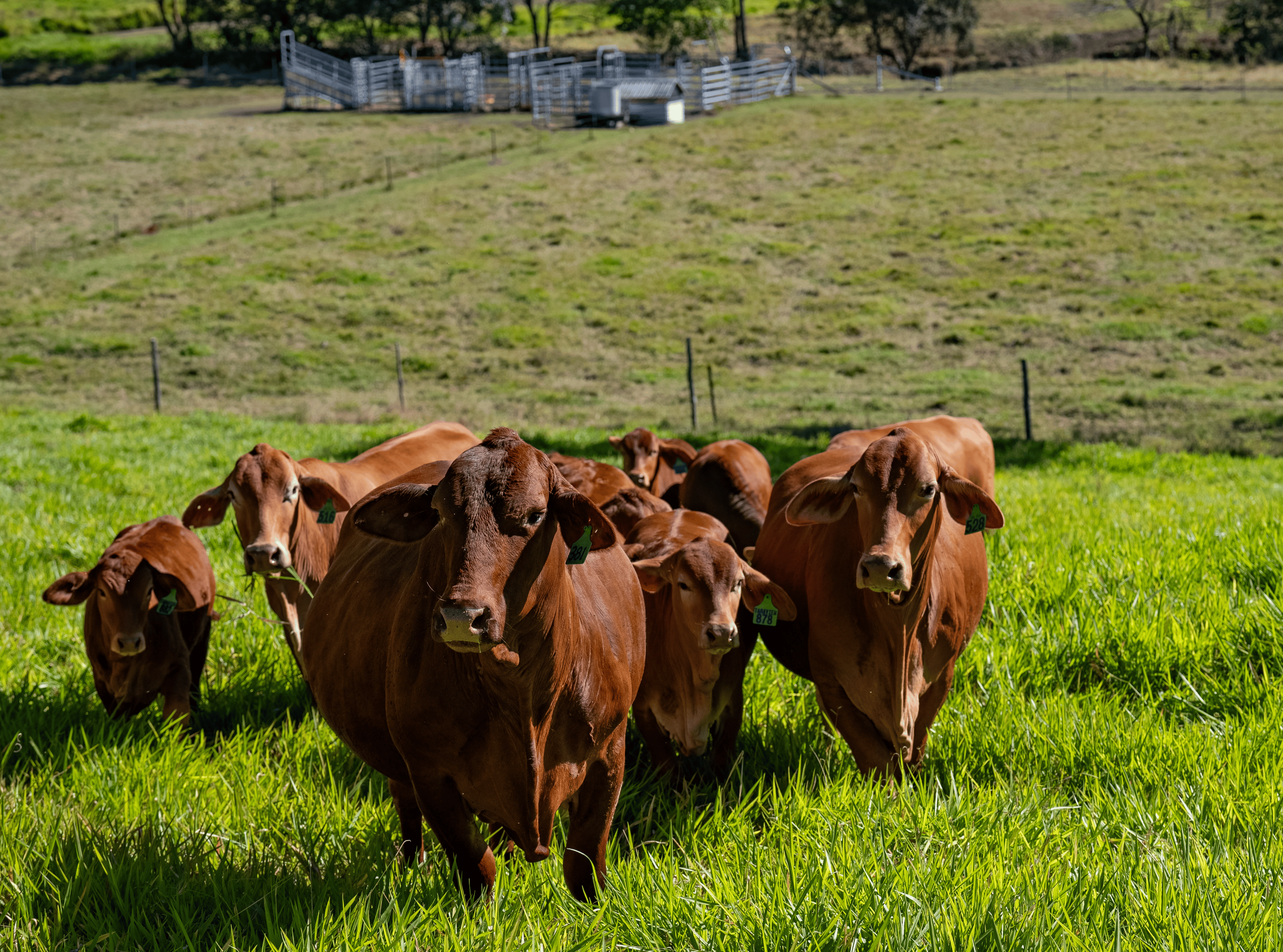
Fertility is the foremost trait economically in a beef herd. When evaluating Droughtmaster bulls, look for evidence that the stud's female herd is joined early and culled hard in order to transfer superior fertility traits to your herd.
Structural correctness matters for longevity. A bull with poor feet, weak pasterns, or excessive sheath will break down in rough terrain before he's delivered enough calves to justify his purchase price.
Carcase quality and market suitability
Processors are paying premiums for cattle that yield well on the hook. When reviewing sale catalogues, pay mind to sires with proven carcass data, from rib fat to eye muscle area and retail beef yield figures. They all measure how progeny will grade at slaughter.
Farmbuy's stud profiles include trait information and breeding focus details, easing the shortlisting process for bulls that align with market targets.
Polled genetics and temperament scoring
Homozygous polled bulls guarantee hornless progeny, removing the need for dehorning and offering a significant welfare and labour advantage. Temperament scoring is similarly practical. Mild-mannered cattle gain weight faster, are safer to handle, and perform better through feedlots and saleyards. Both traits are now standard selection criteria in well-run Droughtmaster programs.
Understanding Droughtmaster bull sale results and pricing
Recent sale benchmarks and record prices
The $320,000 Glenlands record exemplifies the top of the market, though attainable quality Droughtmaster bulls regularly sell from $8,000 to $30,000 at stud sales. Average prices have trended upward over the past five years as demand for tropical genetics surges across northern and central Queensland.
What drives price variation between bulls
Genetics, sire lineage, structural assessment, and temperament data all influence what a bull makes at auction. Ones from proven sires with strong fertility and carcass records consistently attract higher bids. Age, condition, and presentation on sale day also play a role.
How to set a realistic budget for stud genetics
A useful rule: the cost of a bull should be recoverable within two to three joining seasons from the value of his calves. For an operator running 100 cows, a $15,000 bull producing calves worth an additional $50–$100 each at weaning pays for himself quickly. Browsing Droughtmaster stud listings on Farmbuy before attending sales helps benchmark pricing and set realistic expectations.
How to evaluate a Droughtmaster stud before buying
Researching stud history and genetic direction
Before bidding, review the stud's breeding philosophy. What sire lines do they use? How long have they been in the breed? Do they publish performance data? A stud that’s transparent about its genetic direction and culling standards is one worth buying from.
Visiting properties and assessing herd condition
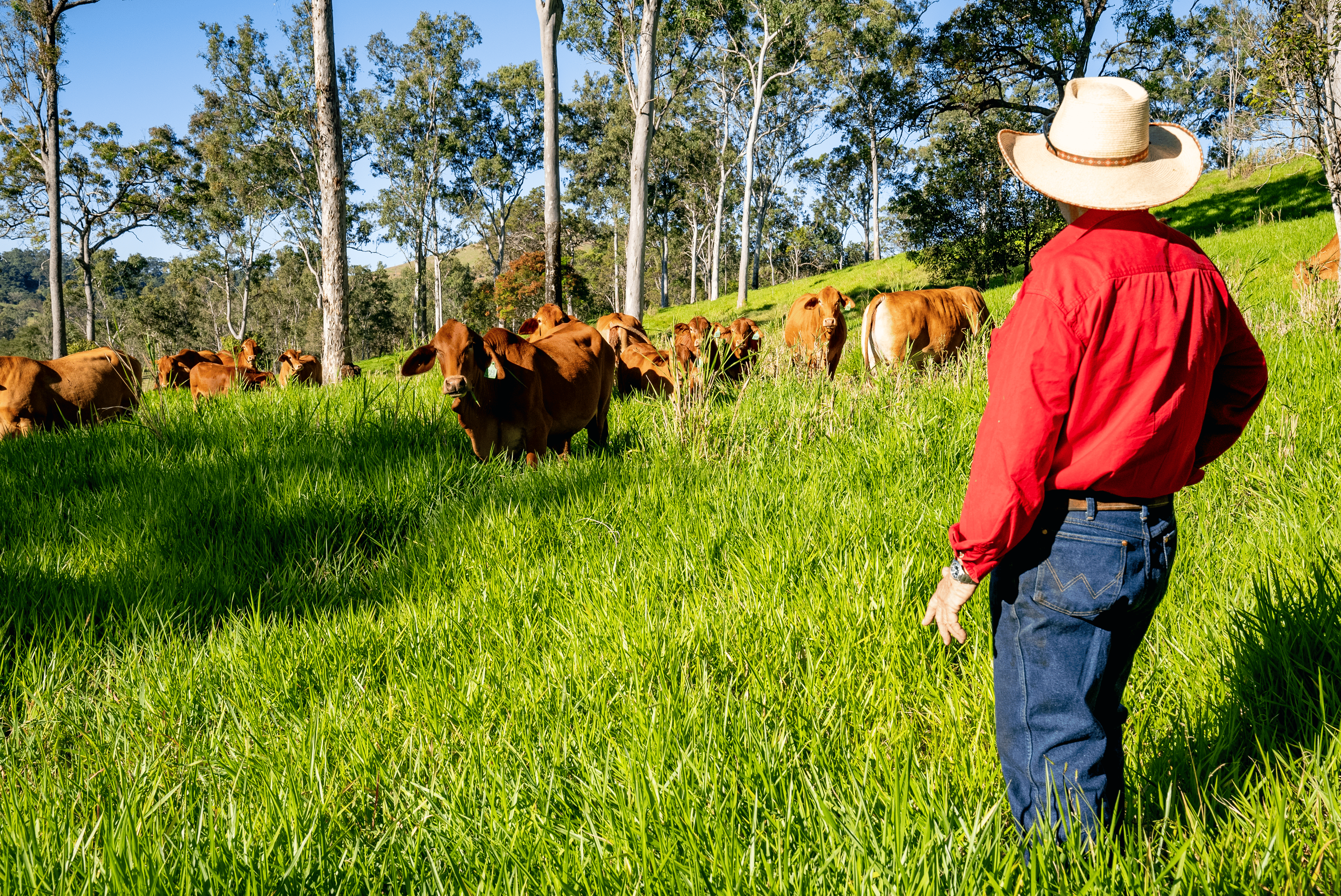
Where possible, visit the stud property before sale day. Look at the cow herd's uniformity, body condition, and the environment the cattle run in. Consider that a bull raised on improved pasture behind a feedlot may not perform the same way in extensive rangeland conditions.
Using online platforms to shortlist studs
Online platforms have changed how producers research genetics. Buyers no longer need to rely solely on word of mouth or sale catalogues that arrive a week before the auction, but are now able to review stud profiles, breeding information, and contact details well in advance. Farmbuy's Droughtmaster stud listings centralise this research, allowing producers to shortlist operations and plan property visits or sale attendance with confidence.
Frequently asked questions
What is a Droughtmaster stud?
A Droughtmaster stud is a registered breeding operation that produces bulls and females of the Droughtmaster breed to sell to commercial and seedstock producers.
Why are Droughtmaster cattle well suited to tropical and semi-arid regions?
The breed carries Bos indicus genetics that provide heat tolerance, tick resistance, and the ability to maintain condition on low-quality pastures. These traits are essential for northern Australian environments.
What traits should I look for when buying a Droughtmaster bull?
Prioritise fertility, structural correctness, temperament, carcase quality, and polled genetics. Review the sire's performance data and the stud's culling standards before purchasing.
How much does a Droughtmaster bull cost at auction?
Quality Droughtmaster bulls typically sell between $8,000 and $30,000. Elite genetics from top studs can exceed $100,000. The 2023 breed record stands at $320,000.
What does "homozygous polled" mean in Droughtmaster breeding?
A homozygous polled bull carries two copies of the polled gene, guaranteeing that all progeny will be naturally hornless regardless of the cow's horn status.
How do I compare Droughtmaster studs before making a purchase?
Research breeding philosophies, review sire lines and sale results, visit properties where possible, and use platforms like Farmbuy to compare stud profiles and contact breeders directly.
What role does fertility play in Droughtmaster herd improvement?
Fertility is the most economically important trait. High-fertility genetics, evidenced by early joining and strict culling, compound across generations, improving weaning rates and overall herd productivity.
Where can I find Droughtmaster stud listings in Australia?
Farmbuy lists Droughtmaster studs across Queensland and other regions, providing breeding details, contact information, and stud profiles to help producers make informed genetic decisions.
Choosing the right Droughtmaster genetics for your operation
Selecting a Droughtmaster bull is a decision that shapes your herd for years. The breed's proven resilience in harsh conditions is only part of the equation. Identifying studs with strong fertility records, sound structure, and market-relevant carcase traits are the determinants of a good and profitable purchase.
Ensure you start your research early. Review stud programs, compare sire lines, and set a budget grounded in commercial reality. Farmbuy's Droughtmaster stud listings give you direct access to breeders and the information you need to buy with confidence.
