















Stud Stock Services for Cattle Breeding

Modern cattle producers face mounting pressure to maximise profitability and meet increasingly stringent market specifications at the same time. The strategic deployment of stud stock services has emerged as a critical differentiator between thriving operations and those struggling to maintain margins. Research from the Australian Agricultural Company demonstrates that leveraging superior genetics through professional stud stock services can boost herd profitability by over 20% within three generations. They can fundamentally transform the economic trajectory of your cattle enterprise.
The evolution from visual assessment to data-driven genetic selection islands as a watershed moment in cattle breeding. Producers who embrace precision through genetics gain measurable advantages in growth rates, carcass quality, and reproductive efficiency. At Farmbuy, we've witnessed firsthand how innovative cattle operations are transforming their herds through strategic genetic investment. Moving beyond subjective appraisal towards scientifically validated breeding decisions has shown to compound returns year after year.
What Are Stud Stock Services and Why They Matter
Stud stock services encompass a comprehensive suite of genetic improvement tools and resources designed to accelerate genetic gain in commercial cattle herds, including:
- Access to elite breeding animals
- High-quality semen from proven sires
- Embryos from superior genetic combinations
- Sophisticated selection technologies
The fundamental value proposition centres on solving the core challenge faced by every cattle producer. They desire to consistently produce animals that meet market specifications, whilst maintaining reproductive efficiency and structural soundness across diverse environmental conditions. Modern stud stock providers have revolutionised the traditional approach by integrating genomic testing, performance recording, and advanced statistical modelling to deliver breeding solutions that address production goals. They cover many aims from targeting premium beef markets with enhanced marbling, improving maternal traits for replacement females, or selecting for feed efficiency to reduce input costs.
This data-driven methodology delivers measurable improvements in herd performance metrics. Commercial producers report average increases of 15-25% in weaning weights and 30% improvement in carcass compliance rates within five years of implementing genetic improvement programmes. Additionally, they enhance important traits like temperament and disease resistance, which directly impact operational efficiency and animal welfare outcomes.
Key Genetic Selection Tools for Modern Cattle Breeding
Estimated Breeding Values (EBVs) and Genomic Breeding Values (GBVs) form the cornerstone of modern genetic selection. These metrics provide objective measurements of an animal's genetic merit across multiple economically crucial traits, including:
- Growth rates
- Carcass characteristics
- Fertility parameters
- Structural soundness
They enable producers to make selection decisions based on predicted genetic potential rather than phenotypic appearance alone.
EBVs utilise complex statistical models that analyse performance data from the individual animal, its relatives, and progeny to predict how that animal's genetics will influence certain traits in its offspring. Accuracy levels hover around 40-90% on average, depending on the trait and amount of data available. The integration of genomic testing has revolutionised this process through GBVs, which incorporate DNA marker information to dramatically improve prediction accuracy. This is particularly true for cases like young animals without performance records, hard-to-measure traits like feed efficiency and meat quality, and traits expressed late in life or only in one sex (such as female fertility).
Modernised stud stock providers now offer comprehensive genetic profiles that evaluate animals across 20-40 different traits simultaneously. This data allows producers to implement balanced selection strategies that optimise multiple objectives, rather than pursuing single-trait selection that often results in unintended negative consequences in correlated traits. Tools like selection indexes combine multiple EBVs into a single economic value that simplifies decision-making, while preserving genetic diversity and long-term sustainability.
Important Breeding Methods and Reproductive Technologies
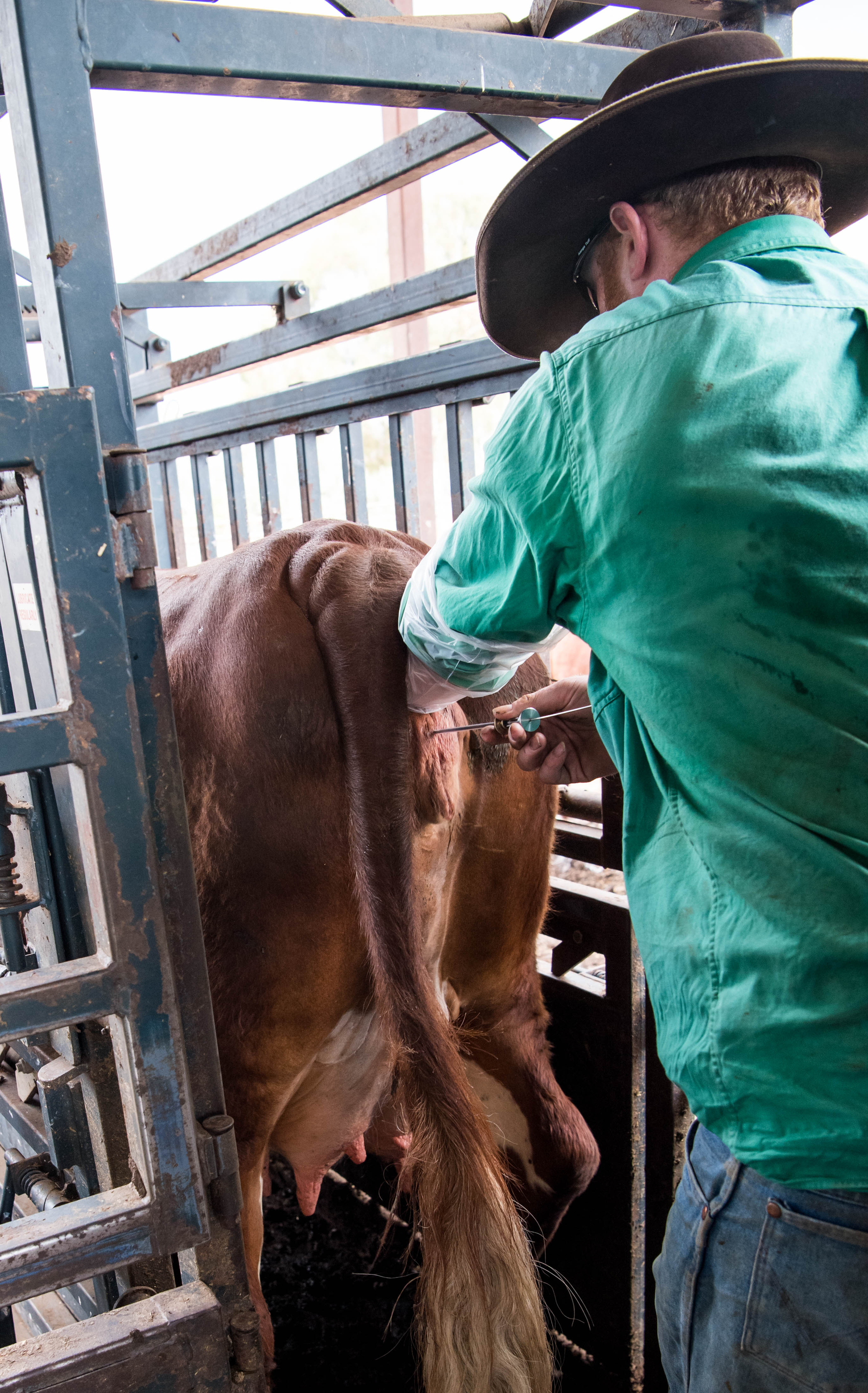
Artificial insemination (AI) remains the most widely adopted reproductive technology in cattle breeding. This method offers producers access to genetics from elite sires worldwide, with the ability to select for reducing disease transmission risks, eliminating dangerous bull handling, and precise timing of calving seasons (synchronised breeding programmes can achieve conception rates exceeding 60% in well-managed herds). The financial advantages of AI become particularly compelling when considering that a single high-merit sire can service hundreds of females annually at a fraction of the cost of maintaining multiple herd bulls. Semen from proven sires typically costs $15-50 per unit compared to annual bull maintenance costs exceeding $3,000-5,000 per animal.
Embryo transfer technology takes genetic acceleration to another level by maximising the reproductive potential of elite females. It allows a single superior cow to produce 20-30 offspring annually through superovulation and transfer into recipient females, effectively multiplying the genetic impact of exceptional maternal genetics across the herd.
Natural service continues to play an important role in many breeding programmes, particularly in extensive rangeland operations where labour constraints or infrastructure limitations make assisted reproduction challenging. However, this is not a cause for concern, as modern stud stock services have improved traditional breeding through rigorous bull breeding soundness evaluations, fertility testing, and genetic profiling. They ensure that naturally mated sires deliver optimal genetic gain, whilst maintaining high conception rates and calf survival.
Selecting the Right Breeding Stock: A Practical Checklist
Successful breeding stock selection begins with clearly defined breeding objectives that align with your target market specifications and production system constraints. Determine whether you’re focusing on producing feeder cattle for particular weight ranges, breeding replacement females with superior maternal characteristics, or developing bulls for the seedstock sector. These objectives directly influence which traits to prioritise and the relative emphasis placed on growth, carcass quality, fertility, and structural attributes.
When evaluating potential breeding animals, producers must look beyond physical appeal to examine comprehensive performance data. This includes EBVs for relevant traits, ensuring accuracy levels exceed 50% for critical selection criteria. Also consider the animal's pedigree depth, genetic diversity to avoid inbreeding depression, and health status including testing for genetic conditions and biosecurity protocols.
Structural soundness assessment remains essential despite advances in genetic testing. Evaluate the feet and leg structure for longevity, jaw alignment for grazing efficiency, reproductive organs including scrotal development in bulls and pelvic measurements in heifers, and temperament scores that predict handling safety and stress susceptibility.
When browsing cattle on Farmbuy, make sure to evaluate the reputation of stud stock breeders. Find out if they maintain transparent performance recording systems, participate in national genetic evaluation programmes like BREEDPLAN or IGS, and implement comprehensive health management protocols. Health measures should encompass vaccination histories, disease testing certification, and quarantine procedures that protect biosecurity, whilst facilitating genetic improvement through strategic animal movement between herds.
The Financial Case for Investing in Superior Genetics
Strategic investment in superior genetics through professional stud stock services delivers quantifiable returns that compound across generations. Economic modelling demonstrates that every $100 invested in genetic improvement typically returns $300-500 over a ten-year period. Returns on investment are achieved through cumulative improvements in growth rates, reproductive efficiency, and carcass premiums that flow through to every calf crop.
Analysis of stud stock sales results reveals strong market validation of genetic merit. Bulls that possess the top 10% EBVs for terminal traits command average premiums of $3,000-8,000 above breed average, while maternal sires with balanced trait profiles (positive calving ease, moderate mature weight, and high milk production) frequently achieve $10,000-25,000 at auction. These results reflect commercial producers' recognition of their profit-generating potential.
The financial impact becomes particularly pronounced when examining whole-herd productivity metrics. Operations that implement structured genetic improvement programmes report average increases in gross margin per hectare of 18-25% within five years. Higher profitability is driven by several advancements:
- Improved weight gains reducing time to market by 30-60 days
- Enhanced carcass compliance rates, capturing premium market specifications worth $50-150 per head
- Reduced veterinary and supplementation costs through improved disease resistance and feed efficiency
- Lower replacement rates due to enhanced female fertility and longevity
Long-term financial sustainability increasingly depends on genetic adaptability to environmental challenges and market volatility. Forward-thinking producers who sell on Farmbuy recognise that investment in traits like heat tolerance, parasite resistance, and feed conversion efficiency positions their operations to maintain profitability despite climate variability and input cost fluctuations. This fact places genetic selection as not an optional enhancement, but an essential risk management strategy.
Final Thoughts on Herd Genetic Improvement
The transformation of cattle breeding from art to science through modern stud stock services represents a fundamental shift in how producers approach herd improvement. A shift has emerged, from subjective visual assessment towards data-driven selection decisions that deliver predictable and measurable genetic gain across traits. The integration of genomic technologies, sophisticated breeding value predictions, and advanced reproductive techniques has democratised access to elite genetics. Producers of all scales are now able to accelerate genetic progress at rates previously achievable only by large corporate operations with extensive resources.
Continuous genetic improvement requires viewing breeding decisions not as isolated annual events, but as strategic investments in long-term herd development. Each selection builds upon previous generations to create cumulative gains that compound into substantial competitive advantages over time. Farmbuy continues to connect buyers with producers who implement cutting-edge stud stock services that combine traditional stockmanship with modern genetic tools. Verifying producers for this ensures that cattle operations remain profitable, sustainable, and responsive to evolving market demands, whilst maintaining the genetic diversity and adaptability essential for long-term industry resilience.
Frequently Asked Questions
How can I start improving my herd's genetics?
Begin by establishing clear breeding objectives aligned with your target markets. Then, source bulls or semen from reputable stud stock providers offering comprehensive EBV data. Start with one or two high-impact traits like growth rate or calving ease, and gradually expand your selection criteria as you gain experience interpreting genetic data. Partner with established seedstock operations that provide ongoing support and education.
What is the single most important trait to select for in breeding cattle?
Fertility consistently delivers the highest economic impact, as cows that fail to produce calves generate no revenue whilst incurring maintenance costs. Focus on selecting for short days to calving, high pregnancy rates, and calving ease, particularly for maternal lines where reproductive efficiency determines profitability more than any other single factor.
How do I read and understand an EBV report?
EBV reports display genetic predictions as deviations from breed average, with positive values indicating above-average genetics and negative values below average. Focus on accuracy percentages (higher is better), trait rankings within breed, and balanced selection across multiple traits rather than extreme values in single characteristics. Most breed societies offer interpretation guides and educational resources.
Is artificial insemination better than using a herd bull?
Both methods have merit depending on your operation. AI offers access to superior genetics, precise calving windows, and reduced disease risk. Meanwhile, natural service provides simplicity and potentially higher conception rates in extensive systems. Many producers combine both approaches, using AI for heifers and top cows whilst maintaining clean-up bulls.
How much should I budget for a quality breeding bull?
Quality bulls typically cost 2-3 times the value of a finished steer, ranging from $3,000-8,000 for commercial operations to $10,000+ for seedstock production. Calculate cost per calf sired over the bull's working life (normally 4-5 years) rather than upfront purchase price to assess true value.
Where can I find reliable stud stock for sale?
Reputable sources include registered breed society sales, established seedstock producers with performance recording histories, and reputable online platforms like Farmbuy. Prioritise suppliers participating in genetic evaluation programmes and offering health guarantees with comprehensive vaccination and testing protocols.
