













Glenwood Merino ram sale tops $9000 at Wellington for a $3289 average
Summary
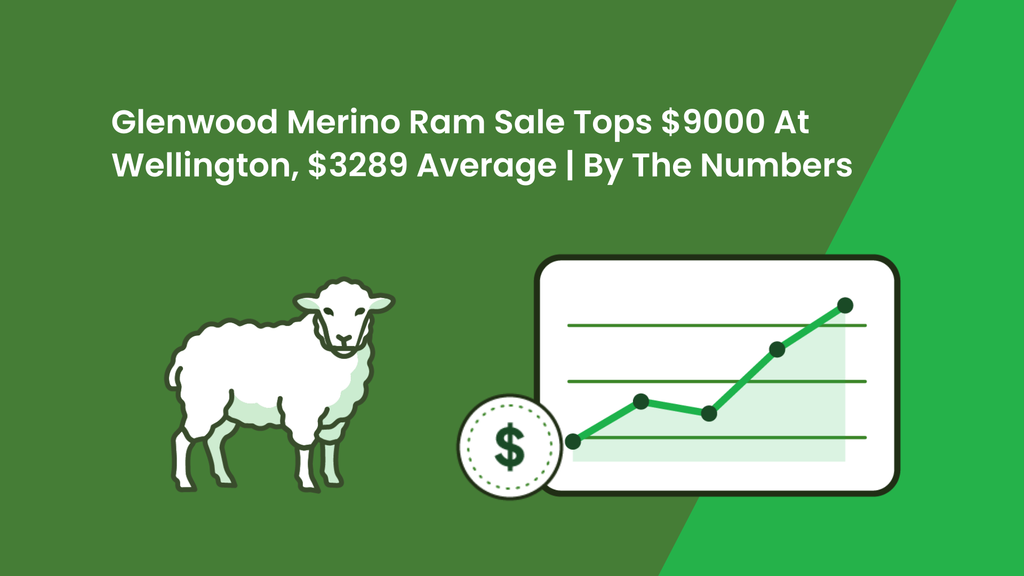
Interstate bidders and repeat buyers pushed the 25th annual Glenwood Merino stud ram sale at Wellington to a higher average and clearance on Friday, October 9. The stud cleared 121 rams from an offering of 136, selling to a top of $9000 and averaging $3289. That was $486 above the 2025 average, with 28 more rams sold than last year.
The feature buyer was Port Wine Pty Ltd, a dual-purpose Merino wool and meat breeding enterprise on peninsula farming country 55 kilometres south of Adelaide. Bidding through Springmount Grazing, it secured six rams for a $6000 average, including the $9000 sale-topper, for a 3000-ewe, 19-micron self-replacing Merino flock at Hindmarsh Tiers on the Fleurieu Peninsula, South Australia. It also paid $8000 for the second top-priced ram.
The sale-topper, a twin sired by Glenwood 201113, is rated in the top 5 per cent of the SRS index and the top 10 per cent of Australian Sheep Breeding Values for yearling staple length and weaning rate. He is also top 20 per cent for yearling worm egg count, yearling fibre diameter coefficient of variation and ewe rearing ability.
Key Data
| Metric | Value |
|---|---|
| Rams offered, sold | 136 offered, 121 sold |
| Top price | $9000 |
| Sale average | $3289 |
| Year-on-year average lift | Up $486 |
| Additional rams sold on 2025 | 28 |
| Feature buyer purchase, average | 6 rams at $6000 |
| Largest draft, average | 8 rams at $4000 |
Frequently Asked Questions (FAQs)
What did the Glenwood Merino ram sale top at?
The sale topped at $9000. The stud cleared 121 of the 136 rams offered for an average of $3289. The second top-priced ram made $8000.
How much did the average rise?
The $3289 average was $486 above the 2025 sale. The stud also sold 28 more rams than it did last year, lifting both the average and the clearance.
Who bought the top-priced ram?
Port Wine Pty Ltd secured him, bidding through Springmount Grazing. The enterprise took six rams for a $6000 average, including both the $9000 top and the $8000 second top, for a 3000-ewe, 19-micron self-replacing Merino flock at Hindmarsh Tiers on the Fleurieu Peninsula, South Australia.
What figures did the sale-topper record?
The twin, sired by Glenwood 201113, is rated in the top 5 per cent of the SRS index. He is top 10 per cent of Australian Sheep Breeding Values for yearling staple length and weaning rate, and top 20 per cent for yearling worm egg count, yearling fibre diameter coefficient of variation and ewe rearing ability.
What traits was the feature buyer targeting?
The flock sits in 1000-millimetre rainfall country, so foot and pastern structure and the ability to cope with worms were treated as essentials. The breeding objective also includes condition score to handle a variable environment, along with better growth and high-quality wool for a dual-purpose animal.
Who were the leading volume buyers?
Trewalla, Wagga Wagga, took eight rams for a $4000 average, topping at $7000, in its second year at the sale. Gilmandyke, Orange, returned for a third year to secure seven rams to $7000 for a $3214 average. Schoen Pastoral, Corowa, bought six rams to $7000 for a $3917 average.
Which long-term clients returned?
Moonbucca, Rylstone, a buyer for some 20 years, took four rams to $5500 for a $4375 average. A neighbouring client of more than 24 years secured seven rams to $6500 for a $4071 average. Brooklyn, Wellington, possibly the stud's oldest client, bought seven rams to $4000 for a $2500 average.
What did the studmaster say about the market?
He said it was a great time to be in the Merino industry, with the recovery in wool prices adding another level on top of strong stock prices. He reported fleeces and bellies from six-month wool off ewe lambs averaging $3760 a bale the day before the sale. Combining wool, meat and surplus sheep sales, he said the returns showed how much money was now in Merinos.
